


Thanks for being our client in 2025, we thought we would do something a bit different this year, so we bought all our clients a solo Bitcoin Miner - find out how to use it below.
IMPORTANT
The key thing to remember is to setup your wallet - this is free to do and you are under no obligation to trade, or buy Bitcoin, but if you turn on your Solo Bitcoin Miner and dont add your wallet address, any winnings you might get will go back to the manufacturer.
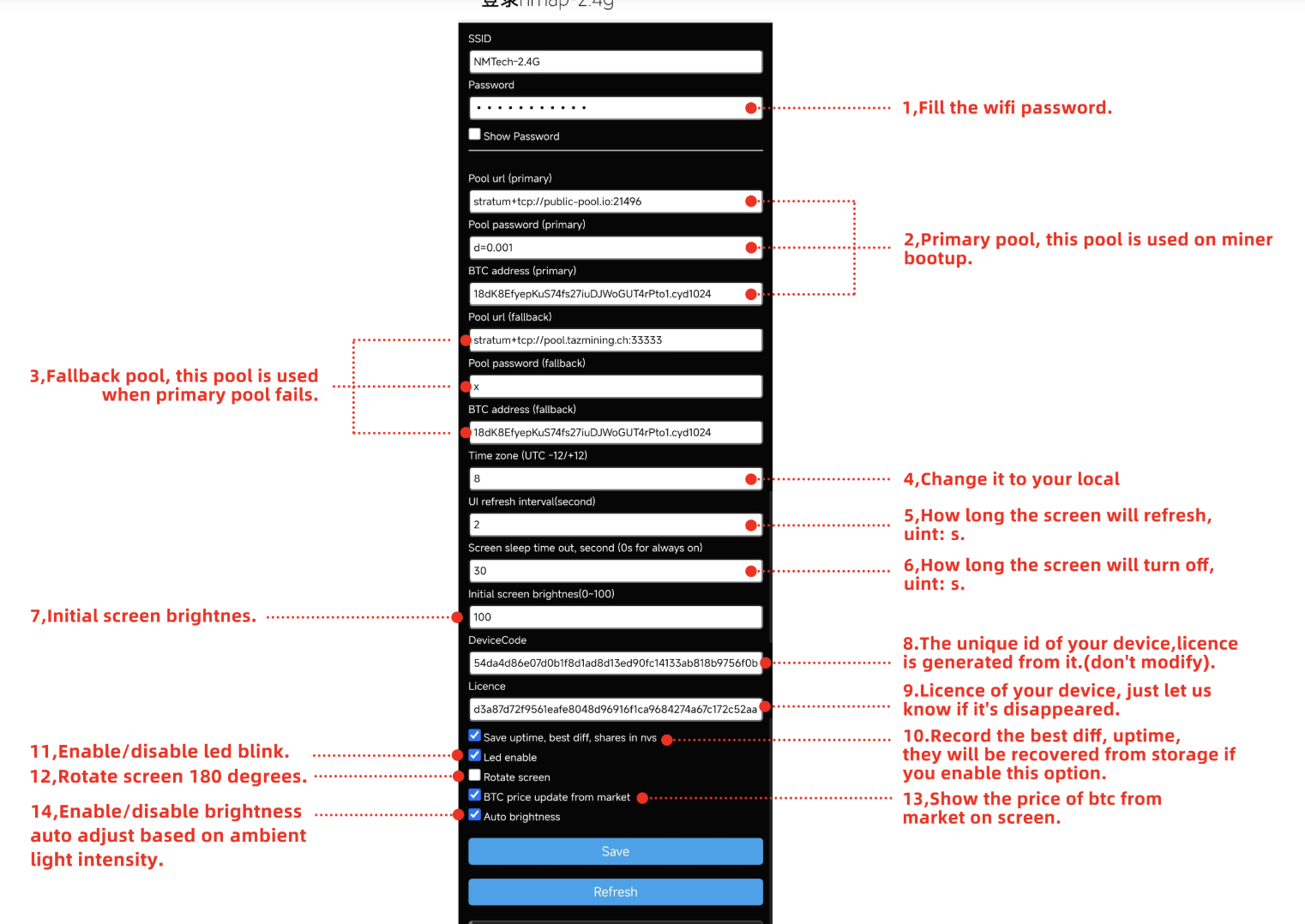
Official Nerd Miner Setup Process
Click here for the full setup information
1 Get a Bitcoin wallet
2 Check the Miner Status
3 Winning a Block
Good luck :)
Past Winners Using a Solo Miner
On March 10, 2025, a solo miner using a 480 GH/s Bitaxe pocket rig solved block 887,212 on the Bitcoin network, earning a total of 3.15 BTC, worth about $450,000 (NZD) at the time!!
He routed his device through Solo.CKPool, the mining pool developed by Con Kolivas, lets individuals keep the full block reward. Kolivas highlighted that a 480 GH/s machine has a 1 in 1,000,000 chance of finding a block per day.
For context, large mining outfits run machines above 230,000 GH/s, making this victory a standout example of luck and persistence. Moreover, open‑source builders like “Skot” design these micro rigs to resist mining centralization. However, against all the odds stacked against it, this modest rig defied expectations and struck digital gold.
A solo miner using CKPool solved block 910,440, earning 3.137 BTC, joining the list of the most successful bitcoin solo miners. The reward combined the standard 3.125 BTC subsidy with about 0.012 BTC in fees.
According to CKPool’s records, this was the 305th solo block completed since the pool’s creation. The miner achieved the result on August 17, 2025, while running roughly 9 PH/s, facing steep odds against larger-scale operations.
On March 21, 2025, an independent miner turned a $2,500 basement rig—four machines comprising a BTC Apollo Full Node, Apollo Standard, Apollo II Standard, and a Bitmain S19Kpro—into a $265,000 (USD) windfall by solving block 888,737.
They pocketed the full 3.125 BTC subsidy and roughly 0.032 BTC in fees. The miner spotted the win on their Apollo dashboard from bed, then confirmed it on BlueWallet, sending ripples of excitement through Crypto Twitter (X).
On January 13, 2026, a solo Bitcoin miner achieved the improbable by solving block 932129. Using NiceHash-rented hashpower, they claimed the full 3.155 BTC reward, 3.125 BTC subsidy plus fees, worth approximately $483,000 (NZD) at the time.
The win highlighted how platforms like NiceHash enable small-scale miners to compete independently, keeping 100% of rewards instead of sharing with pools. Such events, though statistically unlikely, continue to inspire retail participants in Bitcoin’s decentralized ecosystem.
Merely two days later, on January 15, 2026, another solo miner triumphed by mining block 932373. Again via NiceHash, they secured 3.157 BTC (3.125 BTC subsidy + fees), valued at approximately $500,000 (NZD).
The block’s coinbase message carried the NiceHash tag, revealing rented computing power turned a modest outlay into a massive payout. Back-to-back solo victories in one week stunned the community, underscoring Bitcoin mining’s lottery-like nature amid pool consolidation.